
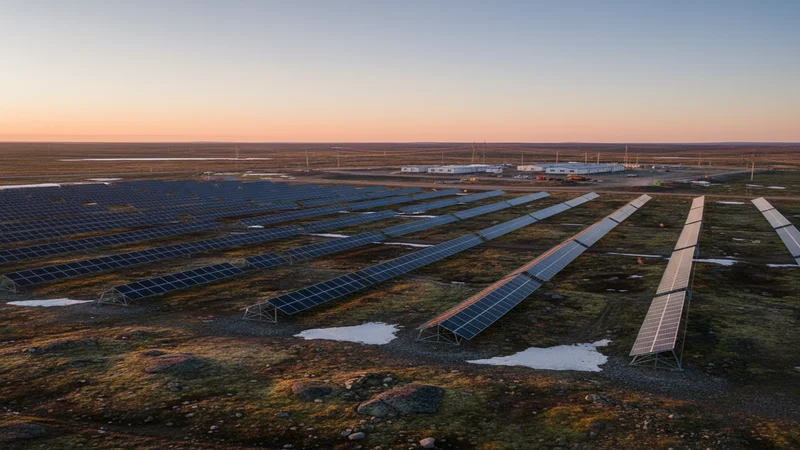
Nunavut's dependence on diesel-generated electricity is one of its most pressing economic and environmental challenges. With approximately 70% of communities relying on aging diesel generators operated by the Qulliq Energy Corporation, electricity costs in the territory are among the highest in Canada, and carbon emissions per capita far exceed the national average. The transition to renewable energy is no longer aspirational -- it is an economic imperative creating substantial B2B opportunities.
Solar Power in the Land of the Midnight Sun
Despite its Arctic location, Nunavut receives substantial solar radiation during the long summer days -- communities above the Arctic Circle experience 24 hours of sunlight during peak summer. Several pilot projects have demonstrated that solar photovoltaic systems, when paired with battery storage, can significantly reduce diesel consumption. Solar panel installations on community buildings, schools, and health centres represent a growing market for equipment suppliers and installers experienced in cold-climate deployments.
The Kivalliq Hydro-Fibre Link Vision
The most transformative energy project on the horizon is the Kivalliq Hydro-Fibre Link, which proposes connecting Nunavut's Kivalliq region communities to Manitoba's clean hydroelectric grid via a combined power and fibre optic corridor. If realized, this project would eliminate diesel dependency for several communities, dramatically reduce energy costs, and bring high-speed broadband simultaneously. The construction and supply chain requirements for such a project would be massive.
Opportunities for Energy Equipment Manufacturers
For manufacturers of solar panels, wind turbines, battery energy storage systems, smart grid technology, and energy-efficient building systems, Nunavut represents a growing market with strong government support and federal funding. Equipment must be rated for extreme cold, often below -40 degrees Celsius, and must be designed for maintenance in remote locations. Companies that can deliver proven Arctic-rated solutions and provide long-term maintenance support are best positioned to capture these opportunities.